
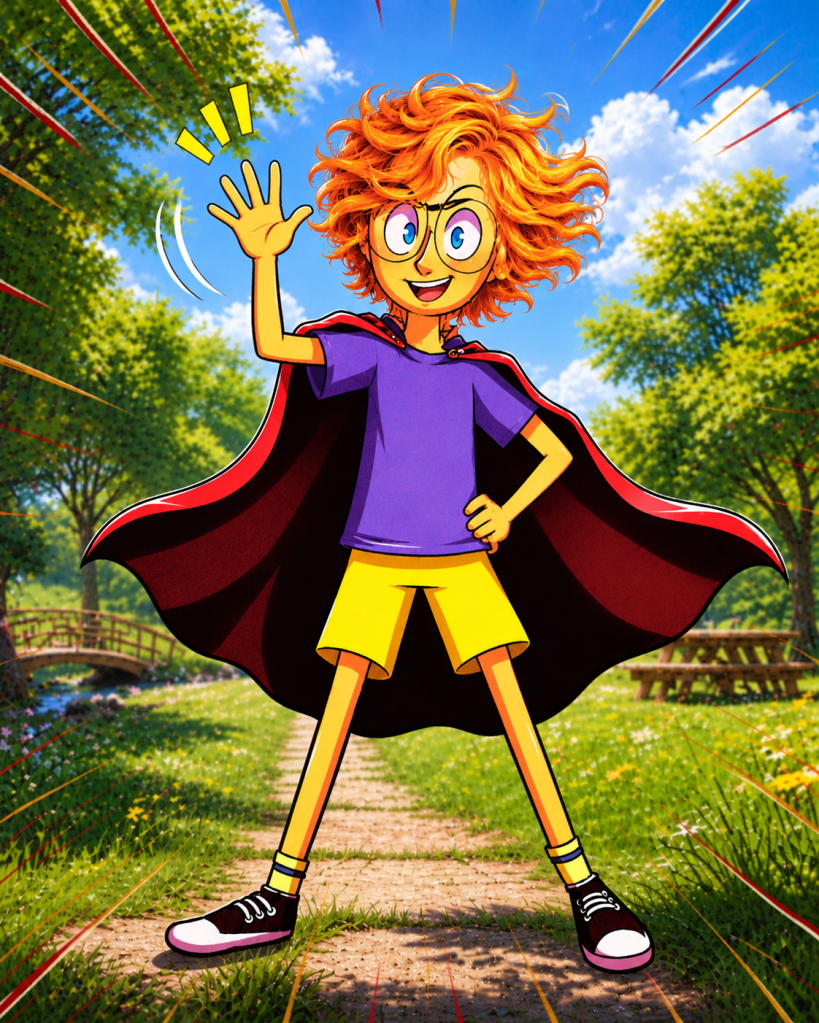
Pixie Van Dimple has not only had a new haircut, but has learned a new word too!
Bixie! which is a ‘messy and choppy hair trend’ ; a style which is shorter than a bob but longer than a pixie cut. What do you think? I think it looks cool and it rhymes with Pixie!
Bixie is a brand new word which has been used this year by young people and circulated online. It was short listed by Collins Dictionary as one of the ‘Words of the Year 2026’! The Collins Dictionary is a trusted English dictionary that explains the meanings, spelling and pronunciation of words, while keeping up with how language changes and new words develop. The actual winner of the ‘Word of the Year 2026‘ is ‘Mogging’ !!
Pixie thinks it is a really funny word! She is not so sure what it really means though or if it is appropriate to use at school, and amongst her friends, so we did some thoughtful research together to explore it’s meaning, where it came from and how new words like this get into the dictionary.
How do new words develop?
Language is always changing. New words are being invented, old words are being given new meanings and expressions that were once only used by small groups of people can become popular all over the world.
A good example is ‘mogging’, which has been named the Collins Dictionary Word of the Year for 2026. It shows how social media, young people and internet culture are changing the way we speak and how new words make their way into the English Language we use every day.
What does ‘mogging’ mean?
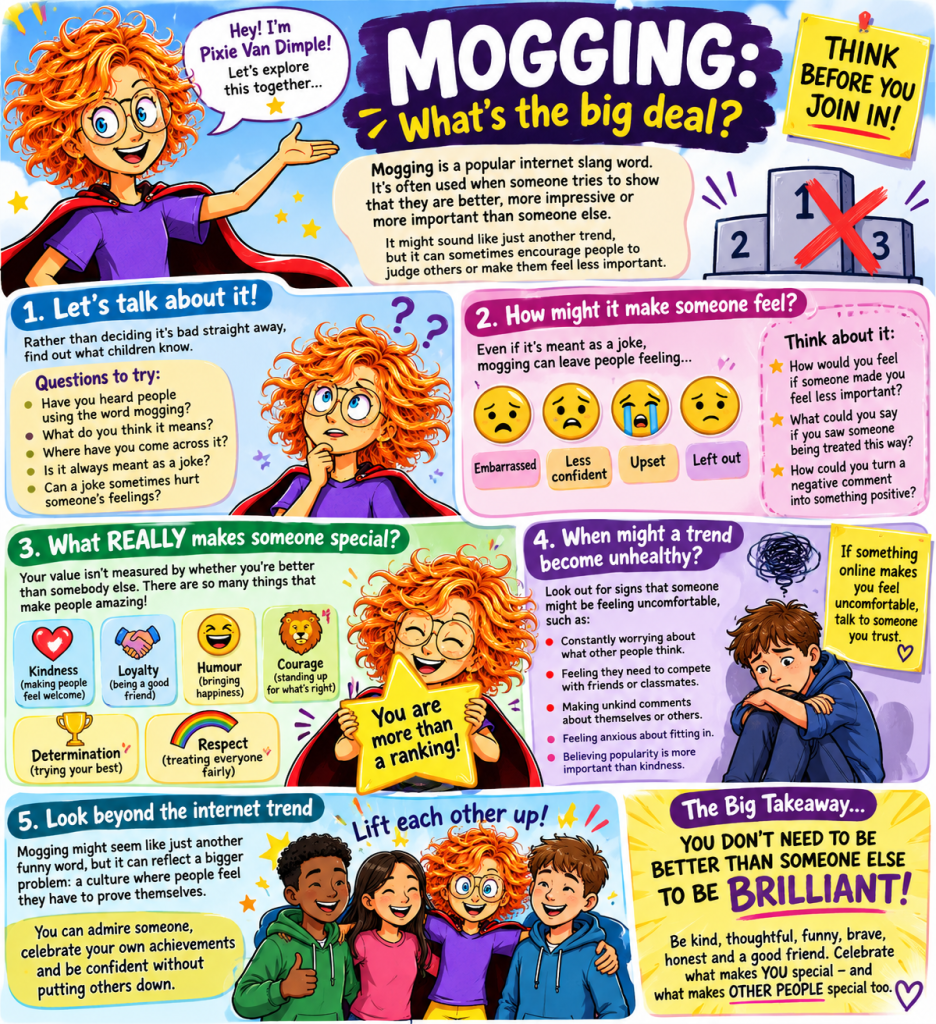
Mogging is a slang word meaning to outshine, outperform or look better than somebody else, often referring to someone’s performance or appearance.
It is often used by young people when someone tries to show that they are better, more impressive or more important than someone else. It can involve putting other people down, making them feel inferior or turning everyday situations into competitions.
While some people use the word jokingly, it is worth thinking about the message behind it. Nobody should have to feel that they are being judged, ranked or made to feel less important than somebody else. Mogging is a word increasingly used online and might sound funny but it can have a more negative meaning.
Interestingly, it has a more complicated history. It is thought to have developed from the abbreviation AMOG, meaning ‘Alpha Male of the Group’, which was used in bodybuilding and online communities discussing male appearance and status. It has since developed into a much broader expression used in everyday online conversations.
Pixie and I thought that it may help parents and carers of young people who may hear the word ‘mogging’ from their friends or see it online, if we shared our research and some advice about how to talk to young people about it.
How to Talk to Young People About Mogging:
When having conversations like this with young people, getting started can be the hardest part. To set the stage in a way that feels natural and doesn’t put them on the defensive, you can ask open-ended questions, like “I’ve been hearing about a trend called ‘mogging’ and looksmaxxing’ and I’m wondering what these mean to you?” If they aren’t clear, you can share that it’s where people compare how others look or act to put themselves above and dominate others, and it’s often online.
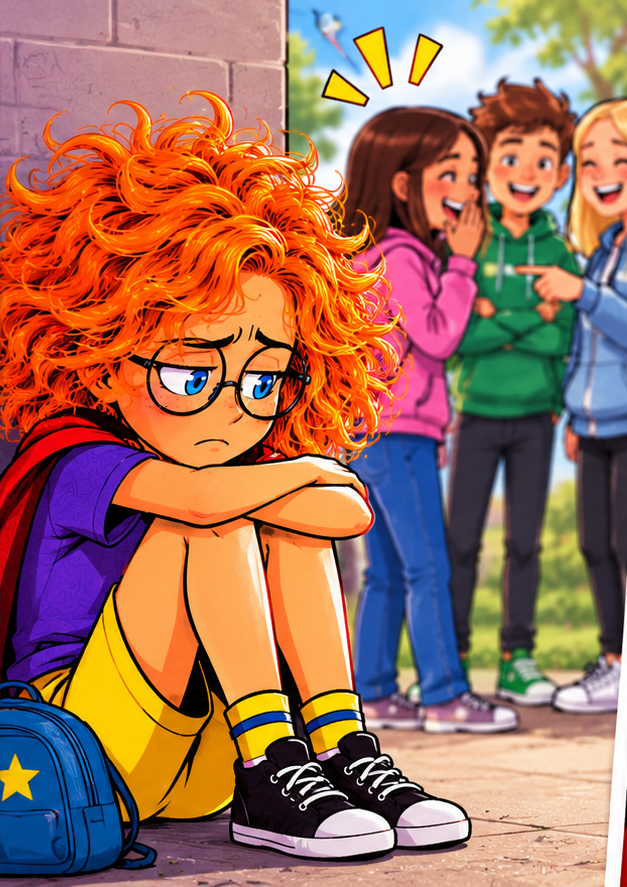
You can move on to talking about how comparison can make others (and them) feel. Explain that while it’s natural for all of us to compare, when we do so in a way that is rigid and negative, this can make others feel bad about themselves. Ask the child if this has ever happened to them and how they felt.
Talk about the value we have as a person isn’t actually about our appearance. Ask your child or teen what other characteristics they feel make someone special. These can be that they are kind, thoughtful, funny, loyal, or hardworking. Emphasize that being confident and liking ourselves, and others, is more about recognizing these traits than ranking someone on how they look in ways like mogging.
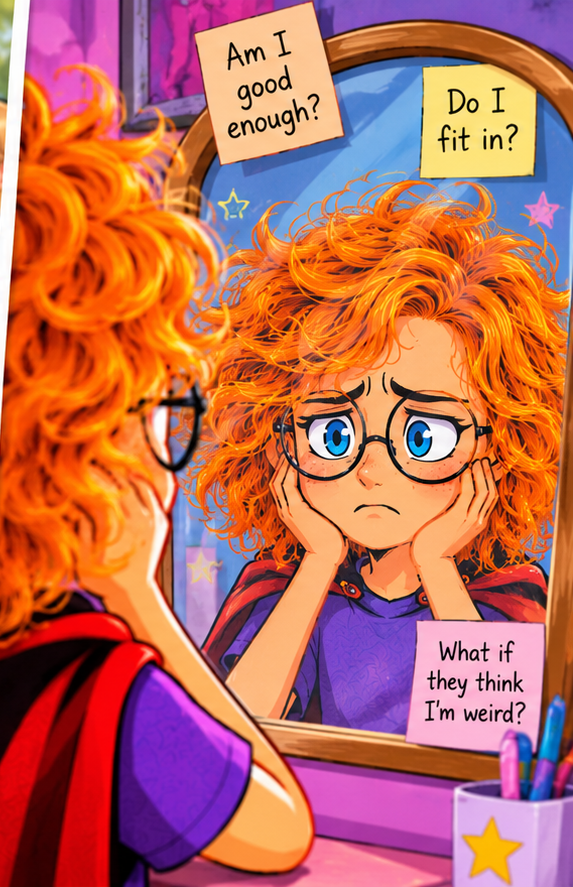
Finally, be on the lookout for signs that your child or teen is feeling distressed by mogging, whether because they are seeing it online, feeling pressure to participate, or are a target. This could be that you notice an unhealthy obsession with their own or others’ physical appearance, following toxic influencers who promote mogging, or seeming withdrawn and shaky in their confidence.
Kids can often feel uneasy, but lack the skills to analyze and manage their feelings. Conversations with you can give them the support and the tools they need to do so.
The most important message to take away
You don’t need to be better than someone else to be brilliant.
You don’t need to win, compete or put others down to be confident in who you are.
Being kind, thoughtful, funny, brave, honest and a good friend will always matter more than trying to mog someone else.
Celebrate what makes you special – and celebrate what makes other people special too.
We hope this helps peeps!
Lots of love
Lynn & Pixie XOXOXOXOXOXO

