
Pixie Van Dimple is talking … Chemistry! Pixie and her friends, Ash Van Jelly and Portia Horsatia Beanzs go to the same school and they all LOVE Science – Ash wants to be an Engineer and Portia thinks she wants to be a vet .. she is not certain but she loves animals!
Ash comes from a family of scientists and engineers – dad is a geologist and mum is a chemist and does loads of research and development.
Portia loves the ocean and wants to be an oceanographer and learn all about the oceans and how they work and how we can look after the creatures in the sea – to be more sustainable – if you read Pixie’s story you will see what can go wrong!
Pixie, well Pixie has quite a lot going on with talking tech and championing Circularity
Pixie loves chemistry too, developing an interest after her epic and quite frankly, terrifying ordeal at the seaside on the day a huge plastic monster emerged from the depths of the seabed, which had been ‘formed over time .. layer by layer a catalogue of hideous plastic crime’ growing bigger and bigger spurred on by an ever increasing supply of plastic waste.
There were lessons to be learned and lessons to be taught! Pixie decided that children need to learn all about plastics, the chemistry of plastics and how many different types there are. Which ones can be recycled and which cannot. Education is everything! she proclaims – and it is true.
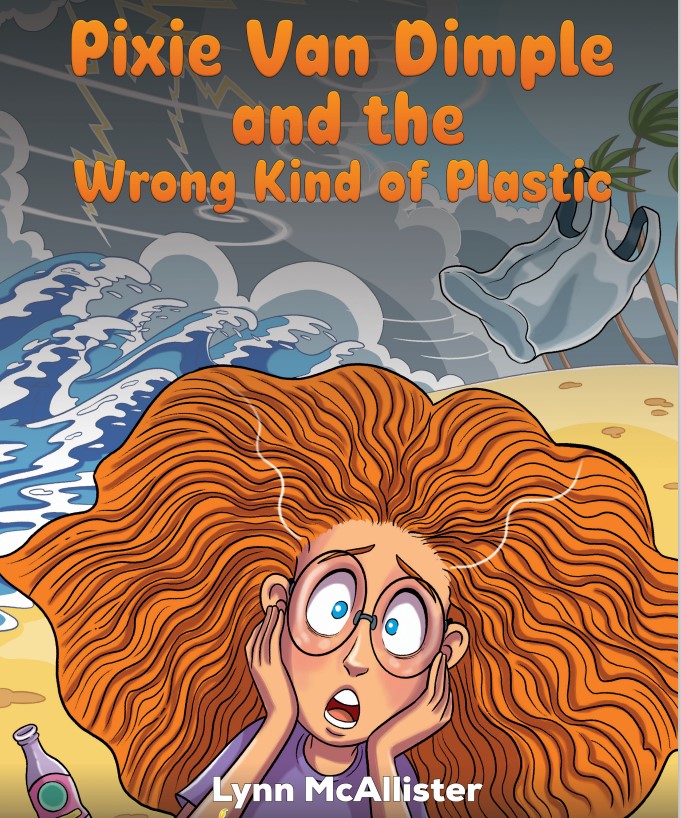
So let us begin…. we set about creating some really informative lesson plans using clever AI and relating it to Pixie’s book:
Here’s are some ideas for Year 5 & 6 Geography, Science & Chemistry Lesson Plans using Pixie Van Dimple and the Wrong Kind of Plastic as an engaging starting point. The focus will be on plastics, their properties, and environmental impact.
The Science of Plastics & Their Impact on the Environment
Age Group: Years 5 & 6 (Ages 9-11)
Subject: Chemistry & Environmental Science
Themes: Plastics – their properties, uses, and impact on the environment
Lesson Objectives:
By the end of these lessons and activities, students will: Understand what plastics are and how they are made. Learn about different types of plastics and their properties. Explore the impact of plastic pollution on marine life and ecosystems. Discuss possible solutions to reduce plastic waste.
Starter Activity
 Read Pixie Van Dimple and the Wrong Kind of Plastic
- Read Pixie’s book where Pixie discovers the dangers of plastic pollution in the ocean
- Ask students: “Why do you think plastic is a problem for the environment?”
- Show pictures or a short video clip of plastic pollution in the ocean – Waterbear is great for short films and videos about the environment – ‘the first interactive streaming platform dedicated to the future of our planet’.
The Science of Plastics
🔬 What is Plastic?
- What is a polymer?
- Plastics are made of polymers, which are long chains of repeating molecules.
- Imagine a chain of paper clips or a beaded necklace—each clip or bead is a molecule, and the whole chain is the polymer.
- Some polymers are natural (like silk, rubber, and DNA), but most plastics are synthetic (man-made).
- Where does plastic come from?
- Plastics are made from crude oil and natural gas, found deep under the Earth’s surface.
- The oil and gas is heated using chemical processes in big factories until the chemicals inside them are changed into polymers.
- These polymers are then shaped into all kinds of plastic products – bottles, bags, toys, even clothes!
- 📢 Discussion Question:
- “Can you think of other materials that come from the Earth?” (Wood, metal, glass, cotton, etc.)
- “How are plastics different from these materials?”
Why Do We Use Plastic?
Ask the class:
- “Why do you think we use plastic instead of other materials like metal, glass, or wood?”
- Explain key properties of plastics:
✅ Lightweight – easier to carry and transport
✅ Strong – can hold liquids and protect food
✅ Flexible – used in clothes, bags, and toys
✅ Waterproof – good for raincoats, food packaging, and water bottles
✅ Durable – lasts a long time (sometimes too long!)
Show examples of different plastic items – hold up some everyday plastic objects:
- A plastic bottle
- A food wrapper
- A plastic toy
- A pen
- A carrier bag
- and ask students: “Where do you think these come from?” (Encourage answers like “a factory,” “oil,” “a recycling centre,” etc.)
- “What do you think will happen to this plastic after we throw it away?”
- Let them guess and guide them to understand:
- Some items might be recycled, but many end up as litter or landfill and dumped into our oceans!
- 🗑️ Plastic in Landfills
- When we throw away plastic—like food wrappers, straws, or bottles—it often ends up in a landfill. That’s a big place where rubbish is buried under the ground.
- But here’s the problem:
- 🕰️ Plastic doesn’t rot like food or paper. It just sits there… for hundreds of years!
- 🌧️ Rain can wash tiny bits of plastic (microplastics) into the soil.
- 💧 These can get into rivers and even into our drinking water.
- 🐛 Animals that dig through rubbish might eat plastic by mistake, thinking it’s food. That can make them very sick.
- So, even when plastic is buried, it can still harm the environment.
- If not recycled, the plastic could stay in the environment for hundreds of years!
- 🌊 Plastic in the Ocean
- Not all plastic ends up in the bin. Some of it blows away in the wind or gets washed down drains. It flows into rivers and eventually into the ocean.
- Once it’s in the sea, plastic causes big problems:
- 🐢 Turtles might eat floating plastic bags, thinking they’re jellyfish.
- 🐟 Fish and whales can swallow tiny plastic pieces. These can fill up their tummies so they think they’re full—even though they’re actually starving.
- 🪸 Coral reefs, which are like the “rainforests of the sea,” can get tangled up with plastic or covered in it. This blocks sunlight and makes it hard for sea creatures to live and grow.
- 🎣 Fishing nets, ropes and lines made of plastic often get lost or dumped in the sea. These “ghost nets” keep drifting in the ocean, trapping fish, turtles, dolphins and even seabirds. They can’t escape and often die.
- 🧼 Even tiny plastic beads in some soaps and shampoos (called microbeads) end up in the sea and are eaten by fish.
- And guess what?
- 👨👩👧 We eat fish. So if fish eat plastic… some of that plastic could end up in our bodies too!
 Properties of Plastics – Hands-on Experiment!
Experiment: Testing Plastic Properties
Materials:
- Different plastic items (e.g., plastic bag, bottle, cup, cling film, straw)
- Water, oil, vinegar, scissors, weights (small objects)
🔬 Class Investigation: What Can Plastics Do?
Let’s test how different types of plastics behave!
You’re going to be real-life plastic scientists today. Your job is to test different plastic items to see how strong, bendy, or waterproof they are. Ready? Let’s go!
🧪 1. Flexibility Test – Can it bend without breaking?
👉 Try gently bending each item.
Ask:
- “Does it bend easily like a straw or a plastic bag?”
- “Does it feel stiff like a plastic ruler or a bottle cap?”
- “If I bend it too far, does it snap?”
💡 Why this matters:
Some plastics are soft and flexible – good for making bags or wrappers. Others are hard and stiff – better for making containers or toys.
💧 2. Water Resistance Test – Does it repel or absorb water?
👉 Pour a small amount of water onto each plastic item.
Ask:
- “Does the water sit on top or soak in?”
- “Does the plastic stay dry underneath?”
- “Would this be good for keeping things dry in the rain?”
💡 Why this matters:
Most plastics are waterproof, which is great for raincoats or bottles. But it’s also why plastic in the ocean doesn’t go away – it doesn’t soak up water or rot like paper does!
💪 3. Strength Test – Can it hold weight without breaking?
👉 Carefully place small objects (like marbles or coins) on top of the plastic item to test its strength.
Ask:
- “How much weight can it hold before it starts to bend or break?”
- “Is it strong enough to carry heavy things?”
- “What might this type of plastic be used for?”
💡 Why this matters:
Stronger plastics are used in building materials, containers or toys, while weaker plastics might be used for wrappers or packaging.
🧂 4. Reaction to Liquids – Does vinegar or oil affect it?
👉 Carefully put a drop of vinegar or cooking oil on the plastic surface. (Use pipettes or droppers.)
Ask:
- “Does the liquid sit on top or make the plastic look different?”
- “Does it go cloudy, sticky, or change colour?”
- “Does it wash off easily?”
💡 Why this matters:
Some plastics resist chemicals, while others can break down or get damaged. This is important when plastics are used for food containers, cleaning bottles or medical equipment.
⚠️ Teacher note: Make sure children wear aprons and use gloves or safety precautions for the vinegar/oil test – especially if using softer plastics or unfamiliar items.
📋 Conclusion (Class Discussion):
Did any plastic change when you added vinegar or oil?
Which plastic was the strongest?
Which one was the most flexible?
Which plastic stayed dry the best?
Discussion:
- Why do we use different plastics for different purposes?
- Which plastics are recyclable and which are not?
 The Problem with Plastic Waste
- Ask: “What happens to plastic after we throw it away?”
- Explain the difference between biodegradable and non-biodegradable materials.
- Discuss how microplastics harm marine life.
Activity: Solving the Plastic Problem
 Group Task: Brainstorming Solutions
- Divide students into small groups.
- Each group will come up with three ways to reduce plastic waste in their school or home.
- Present ideas to the class and discuss.
 Writing Task:
- Imagine you are Pixie Van Dimple. Write a letter to a world leader about why plastic pollution needs to stop.
Reflection & Discussion
 Key Questions:
- What surprised you the most about plastics today?
- What changes can you make to help the environment?
- How can we spread awareness like Pixie Van Dimple?
 Tell Pixie:
Students write one thing they learned and one question they still have about plastics.
Further Activities:
- Art & Posters – Design an anti-plastic pollution campaign poster.
- 🧮 Maths Link: “How Much Plastic Does Your Household Use?”
Objective:
Help students estimate the amount of plastic waste their household produces in a week, then scale this to see monthly or yearly totals—and compare with class data!
🔍 Step-by-Step Activity:
1. Plastic Waste Audit (at Home or In-Class Discussion)
Ask students to count the number of plastic items thrown away or recycled at home for one day. These could include:
Plastic bottles
Food wrappers
Bags
Packaging
Straws
Yogurt pots
Milk cartons
Cleaning product bottles
Have them record this in a tally chart.
2. Weekly Estimate
Multiply the daily amount by 7 to get a weekly estimate.
✏️ Example:
If you used 3 bottles, 2 wrappers, and 1 milk carton per day:
Total per day = 6 items
Total per week = 6 × 7 = 42 plastic items
3. Monthly & Yearly Calculation
Get them to multiply their weekly total:
Monthly: × 4
Yearly: × 52
Let them work this out with a calculator or do it as a class.
📊 Extension: Class Data Comparison
Create a class graph or bar chart: Who produces the most plastic? The least? What’s the class average per week?
Compare the classroom’s total weekly plastic waste to truckloads (using the stat: “A truckload of plastic is dumped in the ocean every minute”).
🤔 Discussion Questions:
Are there any surprises in your results?
What plastic items could your family replace or reuse?
What small changes could reduce your plastic waste?
Plastics: Which Can Be Recycled and Which Cannot?
This lesson is engaging, hands-on, and encourages critical thinking about chemistry and real-world environmental issues.
In your lesson, you can introduce the Plastic Resin Identification Codes (1-7), which are numbers found inside the recycling symbol on plastic products. These numbers help identify what type of plastic it is and whether it can be recycled.
Here’s a simple guide you can use to explain plastics to students:
Plastics That Can Be Recycled
1 – PET (Polyethylene Terephthalate) Found in: Water bottles, soft drink bottles, food packaging.
 Recyclable? Yes! PET is widely recycled and turned into new bottles, polyester fabric, and even carpets.
2 – HDPE (High-Density Polyethylene) Found in: Milk jugs, shampoo bottles, detergent bottles, plastic grocery bags. Recyclable? Yes! HDPE is strong and can be recycled into new plastic containers and outdoor furniture.
5 – PP (Polypropylene) Found in: Yogurt pots, medicine bottles, takeout containers, bottle caps, straws. Recyclable? Sometimes. PP is becoming more recyclable in many areas, but some places don’t accept it yet.
Plastics That Are Difficult to Recycle
 3 – PVC (Polyvinyl Chloride) Found in: Cling film, pipes, vinyl flooring, shower curtains. Recyclable? Rarely. PVC releases harmful chemicals and is difficult to recycle safely.
4 – LDPE (Low-Density Polyethylene) Found in: Plastic bags, bread bags, bubble wrap, some food packaging. Recyclable? Not always. Some recycling programs accept LDPE, but many don’t.
6 – PS (Polystyrene or Styrofoam) Found in: Foam cups, takeaway food containers, packing peanuts. Recyclable? No! Polystyrene is lightweight and breaks apart easily, making it very hard to recycle.
7 – Other (Mixed Plastics, BPA-based plastics) Found in: DVDs, sunglasses, baby bottles, some food containers. Recyclable? Rarely. These are a mix of plastics that cannot be easily processed.
Classroom Demonstration Idea: Sorting Plastics
- Bring in different plastic items and ask students to find the recycling numbers on them.
- Have them sort plastics into “Recyclable” and “Not Recyclable” bins.
- Discuss what happens to plastics that can’t be recycled. (Landfills, oceans, breaking down into microplastics.)
This will help make recycling more practical and relevant for students!
Pixie wants to know if there is a simple way of explaining the chemical make up of all these types of plastics?
Absolutely! And here it is!
The Chemistry of Plastics: A Simple Guide
What Are Plastics Made Of?
Plastics are made from long chains of molecules called polymers. These chains are made of small building blocks called monomers. Different plastics have different types of monomers, which give them their unique properties!
The 7 Types of Plastic and Their Chemistry
1 – PET (Polyethylene Terephthalate) Made of: Carbon, hydrogen, oxygen Used for: Water bottles, food packaging Interesting fact: PET is lightweight and can be recycled into clothes and carpets!
2 – HDPE (High-Density Polyethylene) Made of: Carbon, hydrogen Used for: Milk bottles, shampoo bottles Fun fact: It’s strong because its molecules are packed tightly together.
3 – PVC (Polyvinyl Chloride) Made of: Carbon, hydrogen, chlorine Used for: Pipes, credit cards, raincoats What makes it special? The chlorine atoms make PVC tough and waterproof.
4 – LDPE (Low-Density Polyethylene) Made of: Carbon, hydrogen Used for: Plastic bags, cling film Difference from HDPE? The molecules are spread out—this makes LDPE softer and flexible.
5 – PP (Polypropylene) Made of: Carbon, hydrogen Used for: Yogurt pots, bottle caps, straws Why is it useful? PP is heat-resistant, so it doesn’t melt easily!
6 – PS (Polystyrene or Styrofoam) Made of: Carbon, hydrogen Used for: Takeaway containers, foam cups What’s bad about it? It breaks into tiny pieces (microplastics), which harm the environment.
7 – Other (Mixed plastics like BPA-based plastics) Made of: Different combinations of carbon, hydrogen, and other elements Used for: DVDs, sunglasses, baby bottles Fun fact: Some contain chemicals (like BPA – Bisphenol A) that can be harmful (BPA is explained below!) :
🧪 What Is BPA?
👩🔬 BPA stands for Bisphenol A. It’s a chemical that some plastics are made with — especially hard, clear plastics like water bottles and food containers.
It helps make the plastic strong and long-lasting.
🚫 Why Is BPA a Problem?
Scientists discovered that BPA can sometimes get into our food or drinks if it’s in the packaging — especially when plastic gets hot (like in the microwave or in the sun).
And here’s the important bit:
🧠 BPA can mess with how our bodies work. It can act like hormones — tiny messengers in our body that help us grow and stay healthy. When BPA gets in the way, it can cause problems for our health.
🛒 So What Can We Do?
✅ Look for bottles and lunchboxes that say “BPA-Free”
✅ Avoid heating plastic in the microwave (use glass or ceramic instead)
✅ Recycle properly and try to use reusable items instead of single-use plastic
Fun Chemistry Experiment: Make Your Own Biodegradable Plastic!
Materials Needed:
- Cornstarch (like the powder used in baking)
- Water
- White vinegar
- Glycerin (found in pharmacies)
- A saucepan & spoon
What to Do: Mix 1 tablespoon cornstarch, 4 tablespoons water, 1 teaspoon vinegar, and 1 teaspoon glycerin in a pan.
 Heat it gently and stir continuously.
 It will start to thicken—this is how biodegradable plastic is made!
 Let it cool and shape it into something fun!
 Ask students:
- How is this different from plastic bottles?
- Why might biodegradable plastic be better for the environment?
You see how chemistry fun and links to environmental science! 
Here’s a worksheet to accompany the lesson on The Chemistry of Plastics for Years 5 & 6. It includes activities, questions, and an experiment section.
The Chemistry of Plastics – Student Worksheet
Year Group: 5 & 6 | Subject: Chemistry & Environmental Science
Lesson Focus: Understanding plastics, their chemistry, and how we can make eco-friendly choices.
Section 1: What Are Plastics?
- Plastics are made of p__________, which are long chains of tiny building blocks called m__________.
- Some plastics can be r__________, while others cannot.
Fun Fact: The first plastic was made from tree sap over 100 years ago!
Section 2: Different Types of Plastic
Match the plastic type to the correct use and recycling fact.
| Plastic Type | Used For | Can It Be Recycled? (Yes/No) |
|---|---|---|
| PET | Bottles | Yes /  No No |
| HDPE | Milk containers | Yes / No |
| PVC | Pipes | Yes / No |
| LDPE | Plastic bags | Yes / No |
| PP | Yogurt pots | Yes / No |
| PS | Foam cups | Yes / No |
| Other | Sunglasses | Yes / No |
 Challenge: Look around the classroom or at home. Can you find one item for each plastic type? Write them down!
Section 4: Plastics and the Environment
Did you know? Every minute, a truckload of plastic is dumped into the ocean!
 What problems does plastic pollution cause?
- It can harm sea creatures like ______ and ______.
- Plastic does / does not break down easily in nature.
- Microplastics can get into our food / our shoes (circle one).
 What Can We Do? Use a __________ instead of plastic bottles. Say NO to single-use plastic like ____.
Always **_____** plastic waste correctly.
Your Mission: Plastic-Free Challenge!
For one day, try to use as little plastic as possible! Write down 3 ways you reduced plastic use today:
Class Activity: “Guess the Material” – Exploring Plastic Properties
This interactive activity will help students understand why plastic is used in everyday items and how it compares to other materials like metal and glass.
Instructions:
- Hold up different plastic objects: a plastic bottle, a plastic bag, a food wrapper, a pen, and a straw.
- Ask students:
1️⃣ “What properties does this plastic have?”
2️⃣ “What would happen if we made this from metal or glass instead?”
💡 Encourage students to think about weight, flexibility, durability, water resistance, and safety.
Example Answers for Each Object:
1️⃣ Plastic Bottle 🧴
✔ Properties:
- Lightweight
- Waterproof
- Strong but flexible
- Transparent (so you can see the liquid inside)
- Can be reused or recycled
❌ If it were made from metal or glass:
- Metal bottle – Strong and reusable, but heavier and expensive.
- Glass bottle – Transparent and reusable, but fragile and can break easily.
- Best alternative? Metal bottles are great for reusability, but plastics are often used because they are cheap and light.
2️⃣ Plastic Bag 🛍️
✔ Properties:
- Lightweight
- Flexible
- Waterproof
- Can carry many items
- Cheap to produce
❌ If it were made from metal or glass:
- Metal bag – Too heavy and uncomfortable to carry!
- Glass bag – Impossible! Glass would break immediately.
- Best alternative? Fabric bags (like cotton or jute) are better because they are reusable and eco-friendly.
3️⃣ Food Wrapper 🍫 (like a chocolate bar wrapper)
✔ Properties:
- Thin and flexible
- Keeps food fresh
- Waterproof
- Protects against bacteria and dirt
❌ If it were made from metal or glass:
- Metal wrapper – Might work (like foil), but heavier and not always flexible.
- Glass wrapper – Impossible! You can’t wrap food in glass.
- Best alternative? Biodegradable wrappers or paper-based alternatives (like wax paper).
4️⃣ Plastic Pen 🖊️
✔ Properties:
- Lightweight
- Cheap to make
- Durable but not too hard
- Easy to grip and hold
❌ If it were made from metal or glass:
- Metal pen – More expensive but lasts longer.
- Glass pen – Too fragile and dangerous if it breaks!
- Best alternative? Refillable pens instead of disposable plastic ones to reduce waste.
5️⃣ Plastic Straw 🥤
✔ Properties:
- Lightweight
- Waterproof
- Flexible (some can bend)
- Disposable (but this is also a problem!)
❌ If it were made from metal or glass:
- Metal straw – Reusable and eco-friendly, but expensive and needs cleaning.
- Glass straw – Looks nice but could break and be dangerous.
- Best alternative? Bamboo or paper straws are biodegradable and better for the environment.
Wrap-up Discussion: What Have We Learned?
- Plastics are useful because they are lightweight, cheap, waterproof, and durable.
- BUT not all plastics can be recycled, and they can harm the environment if not disposed of properly.
- Some materials (like metal, glass, or fabric) can replace plastic for certain products, but they also have pros and cons.
Challenge:
💭 Ask students: “Can you think of other everyday objects that could be made from different materials?” (e.g., toothbrushes, lunchboxes, clothing).
This activity will encourage them to think critically about the materials we use and how we can make eco-friendly choices! 🌍♻️
Activity: Creative Writing
 Imagine you are Pixie Van Dimple, the hero from the story!
- Write a short letter to your school, explaining why we need to reduce plastic waste.
- What changes would you like to see?
WOW ! What a lot of information! Soooooo much to learn – Pixie loves learning and asks questions ALL the time – that way she learns to think critically and deeply about things!
Enjoy the ride peeps! Now you know all about plastics and how they affect the environment, you can make your own judgements and decisions and have your own opinions about whether we should be looking for better materials to use in everyday life or just keep using plastics? or just use LESS plastic? and not create so much waste?
So many questions and so much to consider and think about!
Til the next time,
Lots of Love Lynn & Pixie Van Dimple
XOXOXOXOXOXO
 Lynn McAllister