
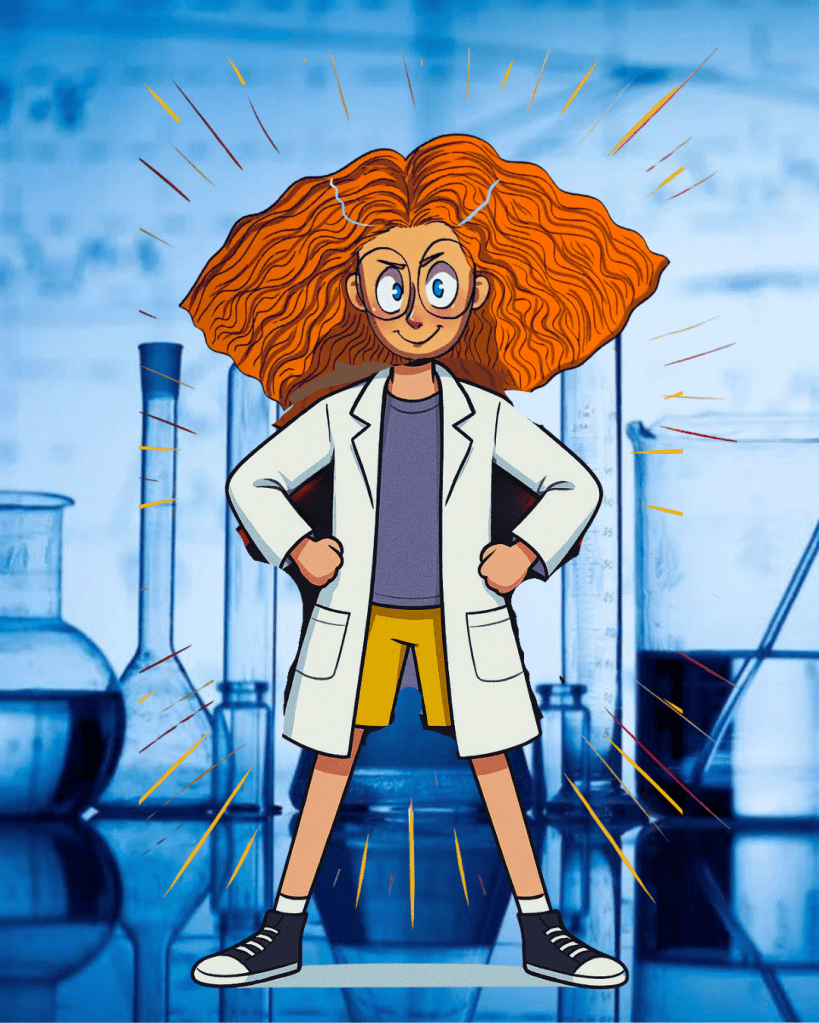
Pixie Van Dimple has been looking into types of polymers. If you read Pixie’s book Pixie Van Dimple and the Wrong Kind of Plastic, you will know that Pixie has made it her quest to campaign about plastic pollution and plastic waste. This involves educating herself about what plastic actually is (which you can read about in her previous post here ), and looking into solutions to reduce plastic pollution and plastic waste. There is a lot to think about and many solutions to consider, such as using plant based plastics instead, or bioplastics… or just using less plastic, as much as possible – more of that later.
One thing to mention is that only around 9% of all plastic, which can be recycled is recycled. Not all of it can be recycled as we will learn. The reason for not recycling plastics which can be recycled is that it costs more to use recycled plastic than to make new plastics from oil and gas! Now isn’t that silly!
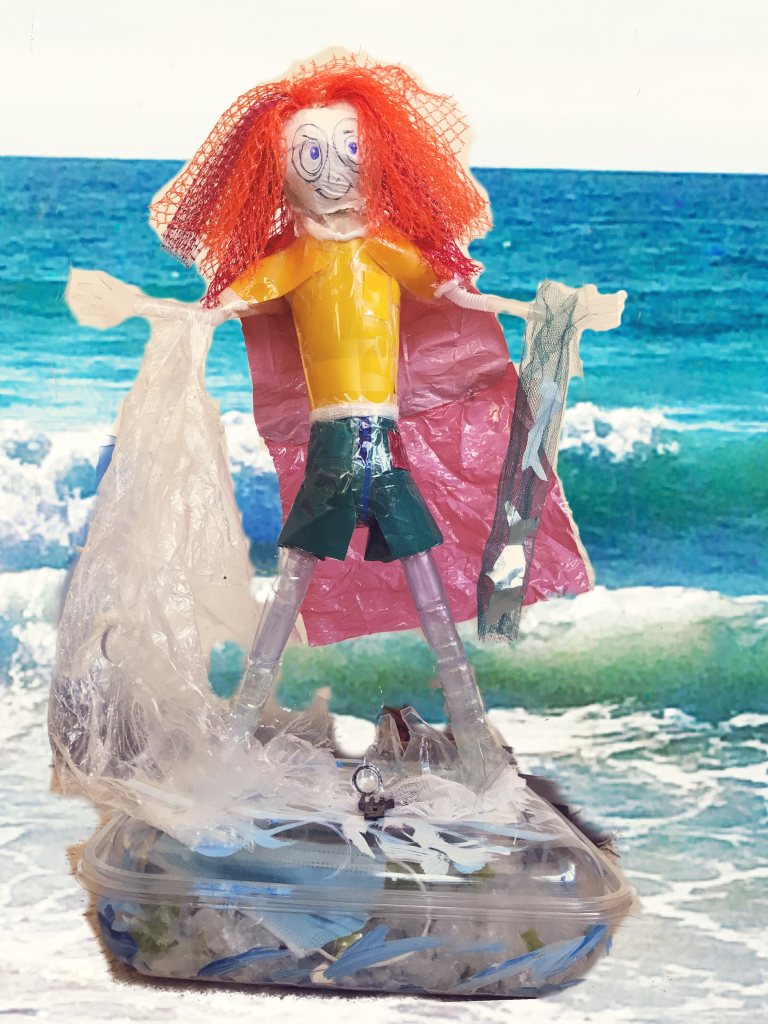
We wanted to reintroduce ‘Polymer Pixie’ again to remind ourselves that plastics can be reused and to demonstrate that there is ALOT of it! I made Polymer Pixie from used plastic bottles, containers and plastic bags, fruit packaging and even put in a couple of face masks we had during Covid-19, as much of that plastic waste was flying around all over the place and ended up in rivers and waterways, ending up in the sea. A vast amount of it, including protective gloves and aprons, was burnt, causing CO2 emissions – so not good for the environment.
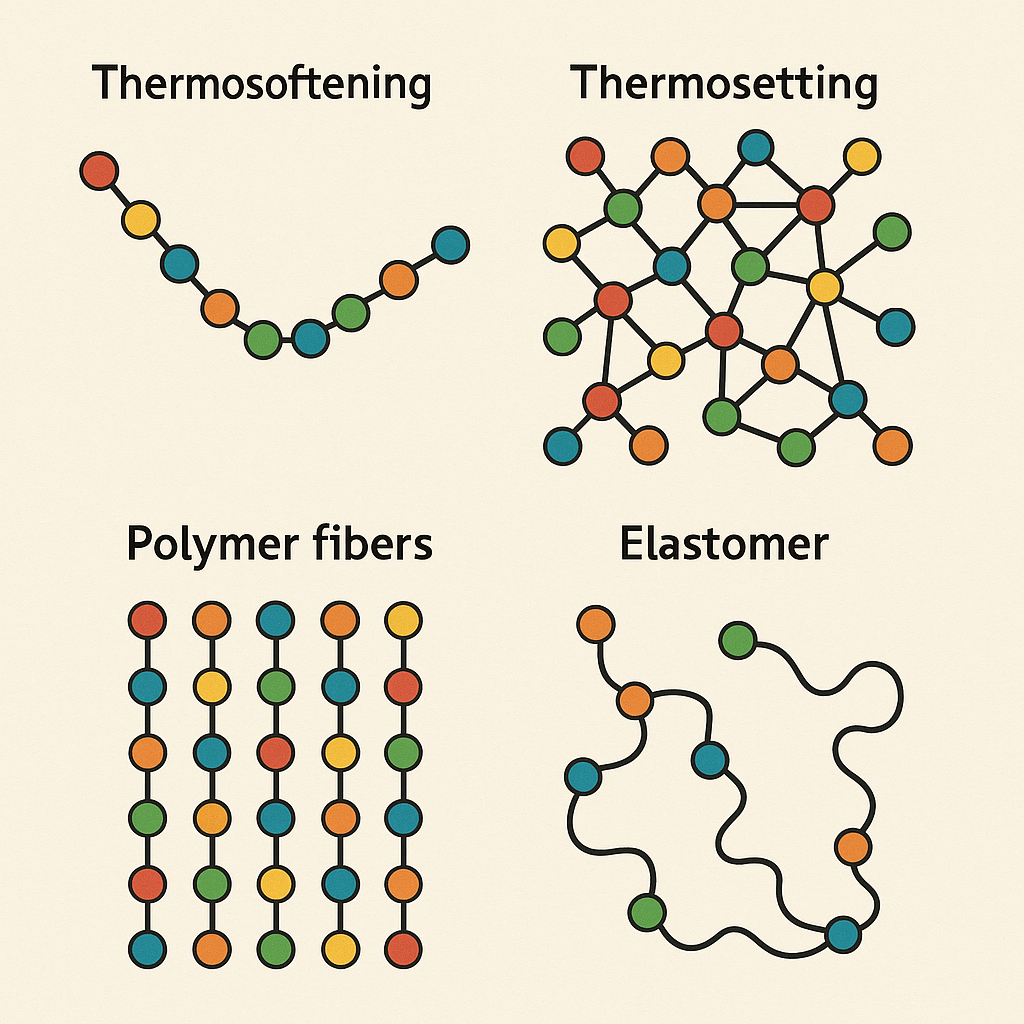
Back to polymers. There are 4 types says Pixie as we will see below. Clever AI can produce some good stuff if you ask it specifically what you need. This is called a ‘prompt’. You can ask your parents to help you. We asked Chat GPT to provide information on the 4 types of polymers and to give examples of each type.
What do you think?
1. Thermosoftening Polymers
These are plastics that soften when heated and can be reshaped. They are made of long, tangled chains that are not linked together.
 Melt when heated and harden when cooled (can be reshaped again and again).
 Recyclable because they can be melted and reused.
 Examples: Polyethylene (PE) used in plastic bags, and Polystyrene (PS) used in food containers.
 Everyday items: cling film, yogurt pots, plastic water bottles.
2. Thermosetting Polymers
These plastics are rigid and heat-resistant. Once they are shaped and set, they can’t be melted again.
 Strong cross-links between polymer chains make them hard and inflexible.
 Do not soften with heat—if you try to reheat, they will burn instead of melt.
 Examples: Melamine (used in kitchenware) and Bakelite (used in electrical switches).
 Used in places that need heat resistance like plugs, sockets, frying pan handles.
3. Polymer Fibers
These are polymers that are arranged in long, straight lines and are woven or spun into fibers.
 Chains are lined up and tightly packed, making the material strong.
 Used to make fabrics and textiles.
 Examples: Nylon, Polyester, Acrylic.
 Found in clothing, sports gear, ropes, and carpet fibers.
4. Elastomers
These are stretchy polymers. They can stretch and then return to their original shape.
 Made of flexible chains with some cross-links—like spaghetti with a few knots.
 Very elastic and bendy.
 Examples: Rubber, Silicone, Neoprene.
 Found in tyres, elastic bands, swimming goggles, and silicone bakeware.
Here’s a simplified worksheet-style version of the polymer content —including space for activities or teacher-led discussion – come on teachers, keep up!
 Polymers Around Us – Worksheet for Students

- Understand that materials have different properties.
- Explore how materials behave (stretchy, hard, soft, bendy).
- Learn about plastics and how we use them in everyday life.
 1. Thermosoftening Plastics
They melt when hot and go hard when cold.
Examples: Plastic bottles, plastic bags, food trays Properties: Can be reshaped again and again.
 Fun Fact: They are easy to recycle!
Draw an object made of thermosoftening plastic: ___________________________
2. Thermosetting Plastics
They set hard once and never melt again!
Examples: Plugs, frying pan handles, light switches Properties: Strong, heat-proof, don’t melt! Fun Fact: They can’t be recycled easily.
Why do you think frying pan handles are made from these? ___________________________
3. Polymer Fibers
They are long and straight, perfect for weaving into clothes!
 Examples: School uniforms, ropes, sports kits Properties: Strong, thin, can be stretched into thread. Fun Fact: Some clothes are made entirely from plastic fibers!
What clothing items do you wear that could be made from polymers? ___________________________
 4. Elastomers
They are stretchy and bounce back into shape!
Examples: Rubber bands, swimming goggles, gloves Properties: Stretchy, squishy, bouncy
 Fun Fact: Bouncy balls are made of elastomers!
Can you stretch something elastic in the classroom? What happens? ___________________________
 Mini Quiz!
Circle the right answers:
Which plastic melts and can be reshaped? Thermosetting Thermosoftening
Which is used in clothes? Elastomer Polymer fibers
Which is stretchy and used in rubber bands? Elastomer Thermosetting
 Lynn McAllister