
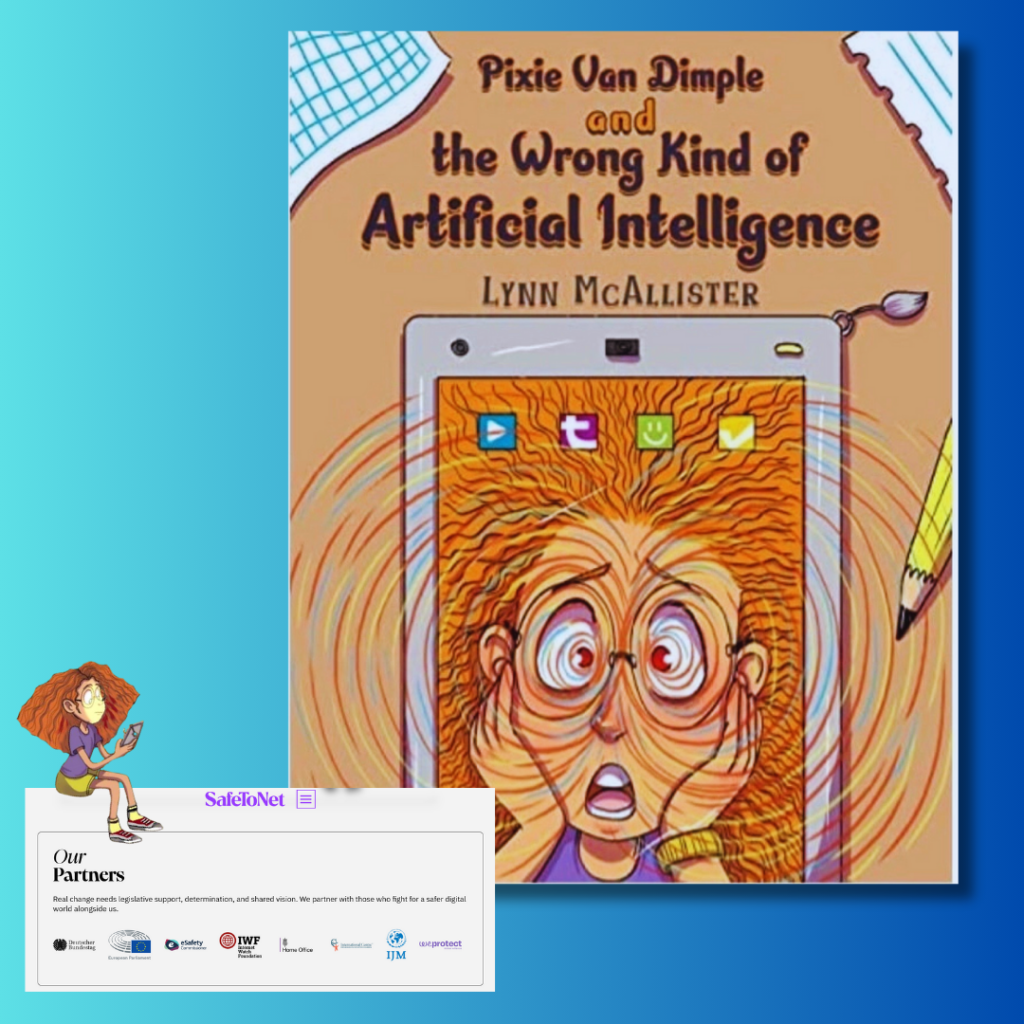
If you have children you may be worried about how you as a parent can keep them safe online- it’s like wacamole out there keeping up with all the dangers and risks there are permeating into our children’s brains from their smartphones!
The reason I wrote my childrens book Pixie Van Dimple and the Wrong Kind of Artificial Intelligence– also available on ALL online platforms…
In the story Pixie is infiltrated by AI Okupator bugs which paralyse her brain and immobilise her … sounds familiar? It’s a didactic tale to read with your kids to open up discussions about online harms – as a parent of 2 daughters, I have always talked to them about the risks and I know how hard it is to feel you have it covered! I also want to point out that there are many positives about being online – it’s all about balance!
I think delaying giving your child a smartphone until they are older is a good idea. Protect our kids as advocated by Jonathan Haidt – this is fast becoming a movement across the globe as we fight to secure regulation and get our kids back from the clutches of ‘Big Tech’ messing with their brains.
Check out https://lnkd.in/eNuAjUYH if you are in the UK and want to get involved and ‘Join the thousands of parents across Britain working together to make childhood better for their children, and future generations.’
Big news is that SafeToNet are launching a hashtag#smartphone for kids in association with HMD (when they are ready) with safety built in :
https://lnkd.in/e6uMWD7D
https://lnkd.in/exGkkPdk
We think this is the right kind of AI don’t we Pixie !
I had a question on LinkedIn about how to tackle harmful content from a concerned parent – ‘interesting! I’ve started good pictures bad pictures with my eldest… and have the jnr one for my youngest… it’s tough because I’m taking preventative measures so they know what to do BEFORE someone shows them harmful imagery, but I also worry I’m telling them things they don’t need to know yet. So hard to know what to do. Do you have any advice?’
This is what I said – ‘I know that it is hard – the most important thing is that you are talking to your children about it and they know to tell you if they see something ‘scary’ or that upsets them. SafeToNet work closely with other agencies such as the IWF to keep improving their protections and filters. We must all work together to do our best to protect our kids as parents and we are not perfect and DO make mistakes and by the way – it is OK to let your children know you make mistakes sometimes as it makes you human!
Don’t forget that schools teach children from primary years upwards about digital literacy in a safe gated environment so they can become more confident online. Have a look at Natterhub for schools and parents – it is brilliant – I have met Caroline Allams and Manjit Sareen who founded Natterhub, and they are wonderful.
– also https://www.internetmatters.org/advice/apps-and-platforms/ ‘
Pixie and I thought it would help to practice some dialogue you may need to have with your kids in certain situations:
What to do and what to say to a child if they have seen inappropriate content:
1. Stay Calm and Thank Them for Telling You
- “I’m really glad you told me about this. You did the right thing by coming to me.”
2. Ask Gentle Questions to Understand
- “Can you tell me what you saw?”
- “Where did you see it?”
- “How did it make you feel?”
(I wouldn’t push too hard, just enough to understand what happened and how they’re feeling.)
3. Reassure and Validate Their Feelings
- “I understand why that was scary/upsetting/confusing.”
- “Sometimes the internet shows things that aren’t meant for kids, and even adults don’t like seeing them.”
4. Provide Simple, Age-Appropriate Explanation
- For violent images: “That was probably something pretend, like a movie, but it’s not something we should be looking at because it can be upsetting.”
- For sexual content: “That was something meant for grown-ups, but it’s not the way we learn about those things in a healthy way.”
5. Empower Them with What to Do Next Time
- “If you ever see something like that again, close it right away and tell me or another adult you trust.”
- “It’s not your fault this happened, and I’ll always help you.”
6. Adjust Parental Controls and Talk About Safe Internet Use
- Depending on what happened, I’d check their internet access, adjust filters, and remind them about safe online spaces.
We hope this helps. Luckily we do have our Online Safety Act in place in the UK. We now need KOSA in the US to go through congress! Keep up the pressure on your representatives to make sure it goes through!
Let us know what you think,
Love Lynn & Pixie XOXOXOXOXOXOXOXO
 Lynn McAllister